News

  • Aug 21, 2026

    Drill Bit Attitude Measurement Error Compensation · Technical Snapshot

    The measurement accuracy of downhole attitude parameters directly determines the effectiveness of directional drilling trajectory control. MWD systems are subject to sensor inherent errors, dynamic vibration interference, and magnetic field distortions, resulting in complex deviations between raw outputs and actual attitudes. Relying solely on a single correction method cannot meet the stringent requirements for inclination and azimuth in horizontal and extended‑reach wells. This article presents a three‑stage compensation framework—"static calibration → dynamic filtering → nonlinear residual correction"—along with key technical specifications and engineering implementation points, for reference by field engineers and MWD professionals.

  • Aug 21, 2026

    Technical Challenges in Wellbore Integrity Monitoring for CCUS Carbon Storage Projects and Fiber Optic Sensing Solutions

    CCUS (Carbon Capture, Utilization, and Storage) is one of the key technological pathways for achieving carbon neutrality. Driven by China's dual‑carbon strategy, a number of large‑scale CCUS projects have entered the construction and operational phases, covering CO₂ capture and geological storage from multiple carbon‑emitting industries such as coal‑chemicals, thermal power plants, and steelmaking. A common feature of these projects is that large volumes of CO₂ are compressed into a supercritical state and then continuously injected through injection wells into deep saline aquifers or depleted oil‑and‑gas reservoirs for long‑term storage.

  • Jul 29, 2026

    Industry News-geological exploration

    The "15th Five-Year Plan" mineral exploration strategy fully launched: In mid-June, the Ministry of Natural Resources convened the mobilization and deployment meeting for the new round of strategic mineral exploration breakthroughs during the "15th Five-Year Plan" period. The meeting emphasized the need to anchor the "15th Five-Year Plan" goals, vigorously strengthen basic geological surveys and strategic mineral exploration, promote the increase of reserves and production of important minerals, and stressed the importance of developing new quality productive forces in the mineral exploration sector.

  • Jul 29, 2026

    Industry News-Efficient Drilling Technology

    Shale oil drilling cycle significantly shortened: On July 6, well JHW91-13 in the Xinjiang Jimsar national continental shale oil demonstration zone was successfully completed at a total depth of 5,501 meters, with a drilling cycle of only 7.75 days – setting a new domestic record for the shortest drilling cycle for a continental shale oil well of similar depth. The block is described as "squeezing oil from a whetstone," and the technical team achieved precise and efficient drilling in complex formations through advanced technologies such as high-precision seismic imaging and intelligent fault prediction.

  • Jun 29, 2026

    How does geosteering improve the reservoir encounter rate?

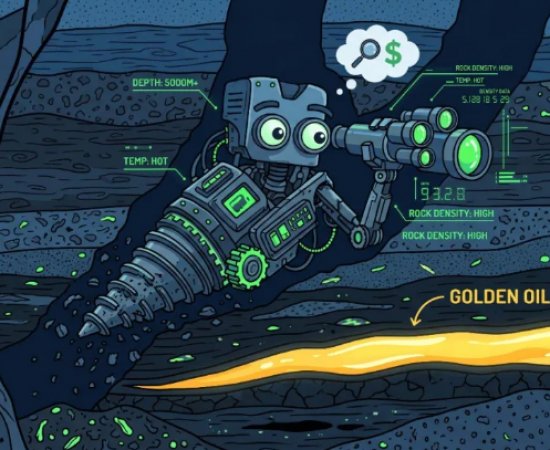
    Imagine you are operating a drill bit, boring three kilometers straight down into the Earth. Your goal is to precisely intersect and then follow a thin oil-bearing rock layer that is only two or three meters thick.

  • Jun 25, 2026

    Breaking Down the "Integrated While-Drilling" Tech Behind CNPC's "Changlong" System – In Plain English

    There’s big news in the oil world: CNPC’s intelligent drilling system, “Changlong” (Long Dragon), has officially gone into operation at Liaohe Oilfield. But a lot of people still don’t get it – what does “integrated while-drilling” actually mean? How does it turn a drill bit into a “smart” one? Today, no jargon, no hype – let’s break this tech down in plain language.

  • May 27, 2026

    Unveiling the Core Technology of High-Temperature Power Supplies: How Thick-Film Hybrid Integrated Circuitry Enables Stable Operation at 200°C

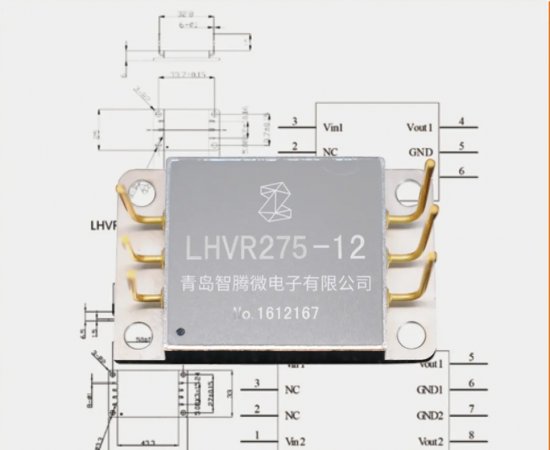
    Thick-film technology supports multilayer wiring, allowing multiple circuit layers to be stacked vertically, significantly increasing circuit density. For DC-DC power modules, this means integrating all components—transformers, filter inductors, control chips, power switches—within a limited space. The LHP10 series module measures only 39.2mm × 23mm × 8.01mm, yet delivers 10W of output power and provides up to three independent voltage outputs, exemplifying the spatial advantages of thick-film technology.

  • May 27, 2026

    From 10,000-Meter Deep Wells to Aerospace Equipment — Cross-Industry Applications and Trends in High-Temperature Power Supplies

    10,910 m, marking the entry of China’s deep‑earth exploration into the era of 10,000‑meter wells. Bottom‑hole temperature increases linearly with depth – in ultra‑deep wells it can exceed 200 °C, and in areas with high geothermal gradients it can reach or even exceed 230 °C. This has directly driven the development and engineering application of 250 °C and even 275 °C high‑temperature power supplies. ZITN’s high‑temperature linear power supplies already cover a case temperature of 275 °C, and its high‑temperature DC‑DC modules reach 200 °C, providing power‑supply technology reserves for ultra‑deep exploration equipment. Looking ahead, as deep‑earth projects target deeper and hotter objectives, 300 °C‑class power supplies will become the next technological battleground.

  • Apr 28, 2026

    Z28 Series DC-DC Module Selection Guide: Starting from Output Power and Operating Temperature

    When selecting a DC-DC power module, output power, output voltage, operating temperature range, and reliability grade are the first core factors to determine. The Z28 series quarter-brick modules from ZITN Power offer multiple models covering different power levels and output voltages, suitable for various application scenarios. Based on the series datasheet, this article provides a selection analysis from the two dimensions of power rating and operating temperature.

info@qdzitn.com