10,910 m, marking the entry of China’s deep‑earth exploration into the era of 10,000‑meter wells. Bottom‑hole temperature increases linearly with depth – in ultra‑deep wells it can exceed 200 °C, and in areas with high geothermal gradients it can reach or even exceed 230 °C. This has directly driven the development and engineering application of 250 °C and even 275 °C high‑temperature power supplies. ZITN’s high‑temperature linear power supplies already cover a case temperature of 275 °C, and its high‑temperature DC‑DC modules reach 200 °C, providing power‑supply technology reserves for ultra‑deep exploration equipment. Looking ahead, as deep‑earth projects target deeper and hotter objectives, 300 °C‑class power supplies will become the next technological battleground.
When selecting a DC-DC power module, output power, output voltage, operating temperature range, and reliability grade are the first core factors to determine. The Z28 series quarter-brick modules from ZITN Power offer multiple models covering different power levels and output voltages, suitable for various application scenarios. Based on the series datasheet, this article provides a selection analysis from the two dimensions of power rating and operating temperature.
Miniature mining directional sensors are core components for achieving high-precision spatial positioning and attitude measurement in mining engineering. By integrating multi-sensor fusion technology and intelligent algorithms, they provide critical data support for mineral exploration, extraction, support operations, and equipment navigation. Taking the DS550LT-A miniature directional sensor developed by ZITN as an example, this article explains its working principle, technical features, and industry applications.
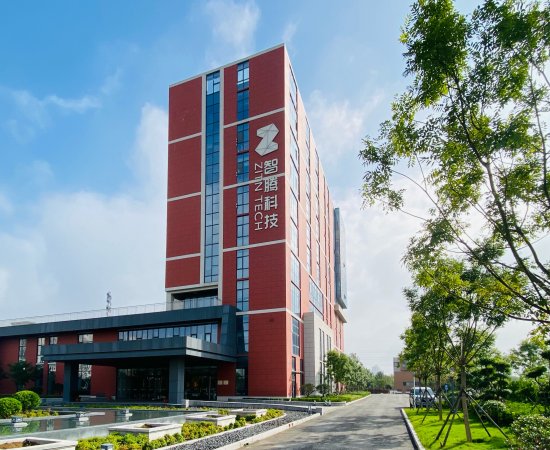
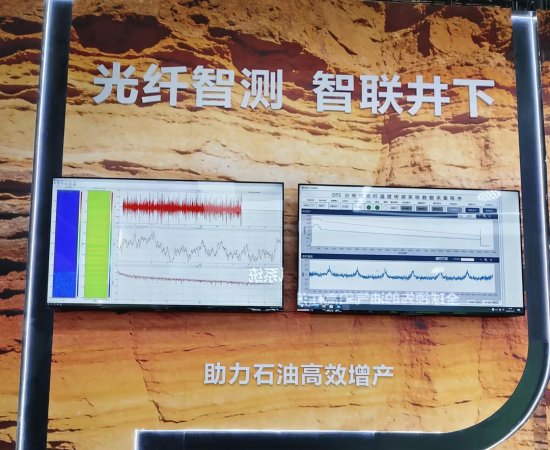
During the 26th China International Petroleum & Petrochemical Technology and Equipment Exhibition, Zitn Technology showcased a range of self-developed innovative products.
Miniature mining orientation sensors are core components for achieving high-precision spatial positioning and attitude measurement in mining engineering. By leveraging integrated sensing technologies and intelligent algorithms, they provide critical data support for mineral exploration, extraction, ground support, and equipment navigation. This article will explain the working principles, technical features, and industry applications of these sensors, using the DS550LT-A miniature orientation sensor developed by ZITN as an example.
Application of Fiber-Optic Technology in Gas Well Casing Leak Detection
Localization and Diagnosis of Tubing Micro-Leaks Using Fiber-Optic Monitoring
In extreme environments such as oil exploration, aerospace, geothermal development, automotive electronics, and industrial automation, electronic equipment often needs to operate stably under harsh conditions involving high temperatures, high humidity, and strong vibration. Particularly in scenarios like downhole measurement, engine control, and geothermal monitoring, ambient temperatures can persistently exceed 150°C, and even reach above 200°C. This poses severe challenges for core storage devices: conventional commercial memories are prone to failure at high temperatures, and data loss or read/write errors can directly lead to system paralysis, resulting in high maintenance costs and safety risks.

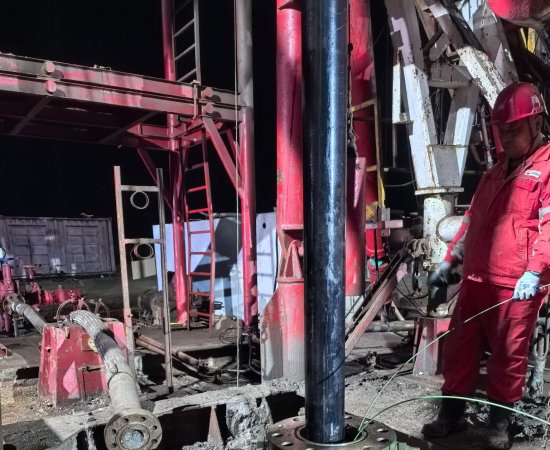
To address the casing pressure test failure in deep coalbed methane wells during completion, this case utilized Distributed Temperature Sensing (DTS) technology for precise leak location. By leveraging the fluid throttling cooling effect, the system successfully captured subtle temperature drops of 0.15~0.2°C. Breaking traditional limitations, this method offers high sensitivity (0.1°C) and Coiled Tubing-equivalent positioning accuracy. It not only confirms leakage but also pinpoints the exact depth, providing a critical basis for subsequent plugging operations and ensuring wellbore integrity in complex geology.