Case: Coalbed Methane Casing Leak Detection
Feb 25, 2026
Case: Coalbed Methane Casing Leak Detection
Case Background: Casing Leak Detection in Deep Coalbed Methane Wells
Operation Stage: Completion stage (post drilling and casing running).
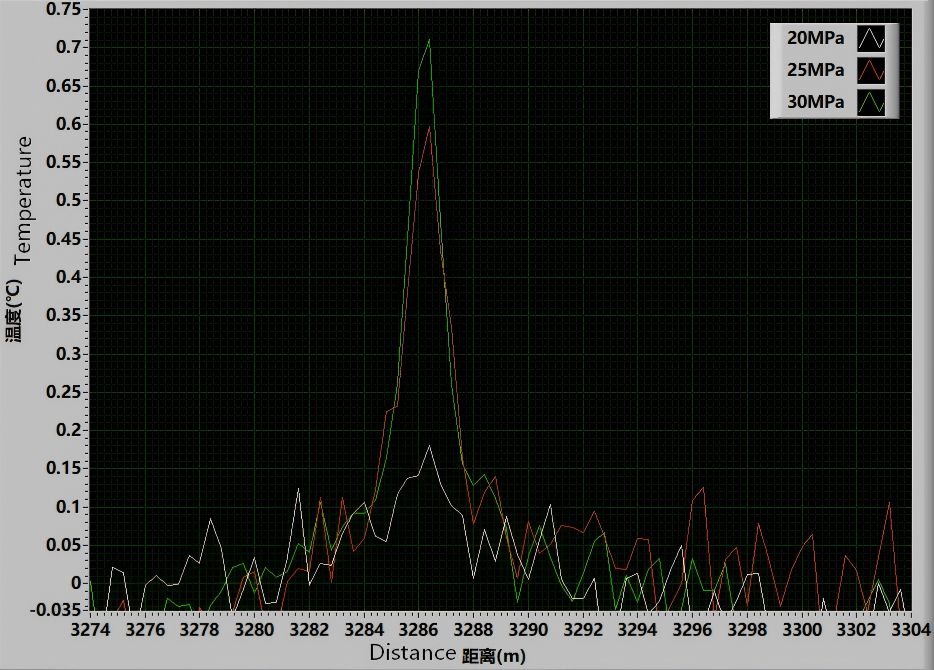
Problem Phenomenon: A pressure drop was observed during the casing pressure test. This indicated compromised wellbore integrity and a potential leakage risk, necessitating urgent leak location.
Technical Challenges: Conventional pressure testing can only confirm if a leak exists, but cannot identify where the leak is located. Furthermore, the complex geology of deep coalbed methane reservoirs demands high-precision leak detection.
Technology Interpretation: DTS Fiber Optic Temperature Sensing Technology
This case employed a Distributed Temperature Sensing (DTS) system to achieve precise leak detection.
Core Principles:
Thermal Effect: When fluid (e.g., pressure test water or gas) leaks through micro-cracks or threaded joints in the casing, throttling expansion or flow acceleration occurs. This causes a slight temperature change at the leak point, typically manifesting as a minor temperature drop due to heat absorption.
High-Precision Capture: The DTS system utilizes the principle of Optical Time Domain Reflectometry (OTDR) to monitor continuous temperature variations within the wellbore. In this instance, the equipment successfully identified a subtle temperature drop of 0.15 ~ 0.2°C at the leak location.
Technological Breakthroughs:
High Sensitivity: This application successfully verified the DTS equipment's capability to detect minute temperature differences on the order of 0.1°C. This indicates that the system can handle not only conventional monitoring but also high-difficulty micro-leak detection.
High Positioning Accuracy: The leak detection positioning accuracy reached a level comparable to Coiled Tubing operations. This means fiber optic temperature sensing can do more than just "find the general area" like traditional methods; it can precisely lock onto the specific depth, providing a direct basis for subsequent precision plugging operations.